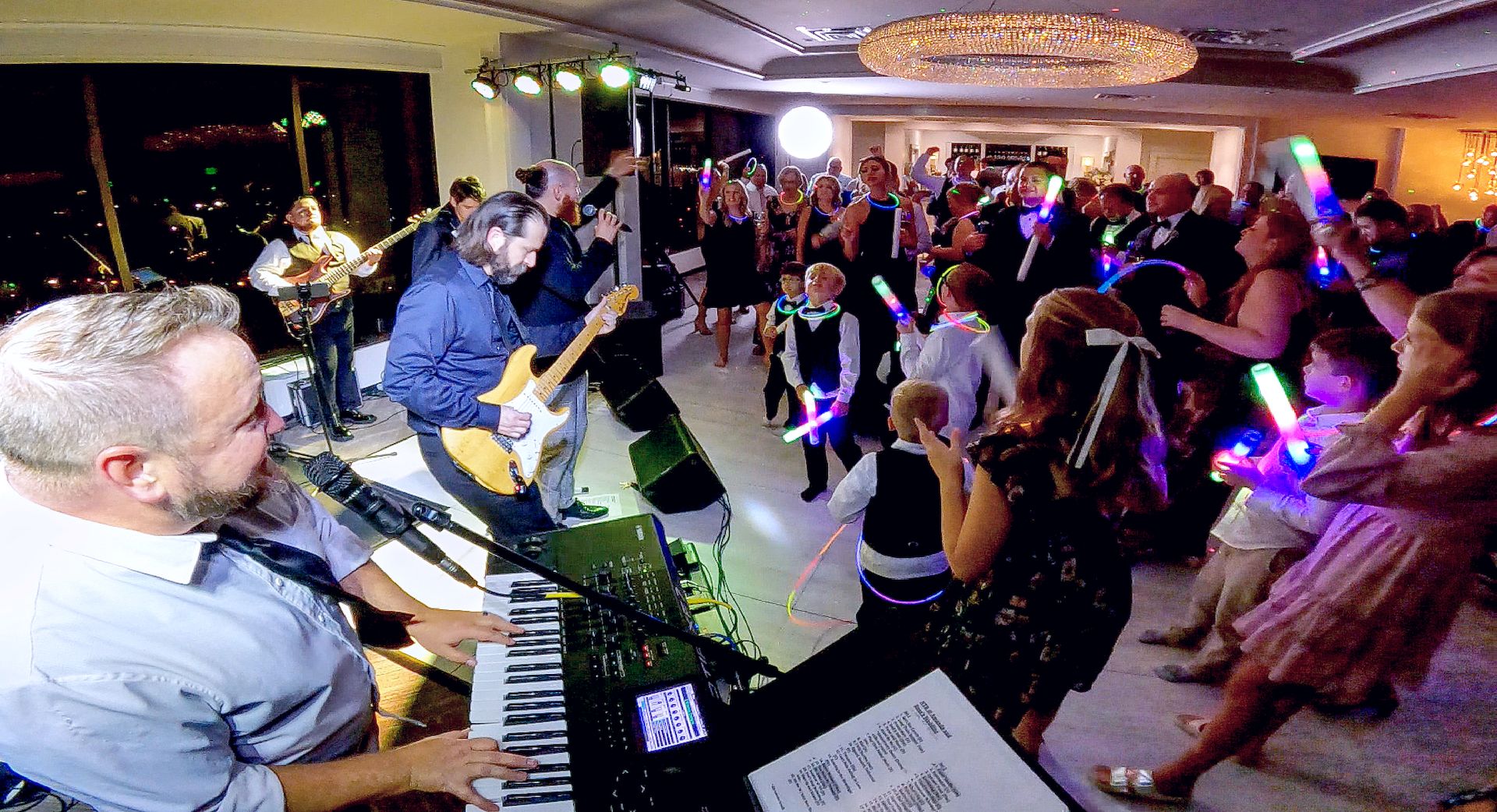
The Wedding Band Industry Has Changed... Have You?

When I first started performing weddings and corporate events, I believed something that many musicians still believe today:
A band is a band.
Five people. Six people. Maybe eight people.
The same musicians performing together every single weekend.
If one person couldn't make the gig, the band simply didn't take the job.
That was my reality for years.
But over time, I discovered that the current wedding and corporate event industry evolved into something very different (It may have already been this way and I just didn't realize it).
And if you're trying to book more special events, you need to understand this part of the equation.
The Traditional Band Model
My first special event band was straightforward.
We had five musicians.
Those five musicians played every gig together.
If someone wasn't available, we usually didn't take the event.
Many musicians assume this is still how most successful event bands operate.
In reality, many of the biggest players in the industry have moved far beyond this model.
How My Band Became Forty Musicians
Later, I joined a group that originally started as a six-piece band.
As demand grew, clients started asking for more dates.
Sometimes there would be multiple weddings on the same day.
Eventually the band leader faced a choice:
Turn away work.
Or expand.
The decision was made to bring in more musicians.
Then more.
Then even more.
What began as a six-person band eventually became a network of roughly forty musicians capable of performing multiple events simultaneously.
Today, we can often field several versions of the band at the same time while maintaining a consistent experience for clients.
My Eyes Were Opened
Recently I came across a promotional video from a wedding band in another part of the United States.
The video showed the band expanding from a small group into larger and larger configurations.
Three musicians.
Five musicians.
Eight musicians.
Twelve musicians.
Fourteen musicians.
It was as unique way to show that the band could be expanded and customized.
Then ... I found another band's video.
And another.
And another.
The videos looked nearly identical.
Each band had a website that looked nearly identical.
The business models looked nearly identical.
That's when I realized something important:
Many of these organizations aren't traditional bands at all.
They're networks.
And in many cases, these bands were part of one single network.
What Are "Screamer Bands"?
In some major markets, like New York and Los Angeles, there has long been a model sometimes referred to as a "screamer band."
The idea is simple.
A company maintains a large roster of available musicians.
When a client books an event, the company assembles a group based on availability, location, instrumentation, and budget.
The musicians may be fantastic players.
In some cases, they've never met each other before.
They're simply professionals hired to deliver a quality show.
And most of the time, they do.
Why This Model Works
There are several advantages.
More Flexibility
Clients can customize the size of the band.
A smaller event might need a quartet.
A large corporate gala may want a twelve-piece show band.
More Availability
Instead of turning away work, the company can service multiple events simultaneously.
Greater Geographic Reach
A larger roster means more musicians can be deployed across wider regions.
More Revenue Opportunity
More available musicians means more events can be accepted.
More accepted events means more growth.
The Potential Drawback
There is one challenge.
Chemistry.
A group of musicians who have played together for years develop instincts.
- They know how each other think.
- They know how each other react.
- They know how songs are interpreted.
When musicians have never played together before, there can be uncertainty.
Even highly skilled players can experience communication issues when there is no established relationship.
That doesn't mean these groups are bad.
Many are excellent.
But there is a difference between musicians who know each other deeply and musicians who are meeting for the first time.
What This Means For Your Band
If your goal is to grow within the wedding and corporate event space, the this trend matters.
Your competition is changing.
Many successful event bands are no longer operating as fixed groups.
They're operating as scalable organizations.
That doesn't mean you need hundreds of musicians.
But it may mean:
- Building a substitute list.
- Developing backup performers.
- Training additional musicians.
- Creating systems that maintain consistency.
- Expanding your roster without sacrificing quality.
The bands that can consistently deliver great performances while serving more clients often have a significant advantage.
Final Thought
The wedding and corporate event world looks very different than it did even ten or fifteen years ago.
Whether you love this trend or hate it, it's happening.
Understanding how these organizations operate can help you make smarter decisions about your own performing career.
If you want to perform more, earn more, and create more opportunities for yourself, it may be time to think beyond the traditional band model.
The question isn't whether the industry is changing.
The question is whether you're changing with it.
Keep performing.
Keep growing.
And most importantly, Be the Performer You're Meant to Be.
Be the Performer You Are Meant to Be!
Join us to start performing with confidence, purpose, and fun... one email at a time.
When you signup, you will get regular email updates with free content and product offers.