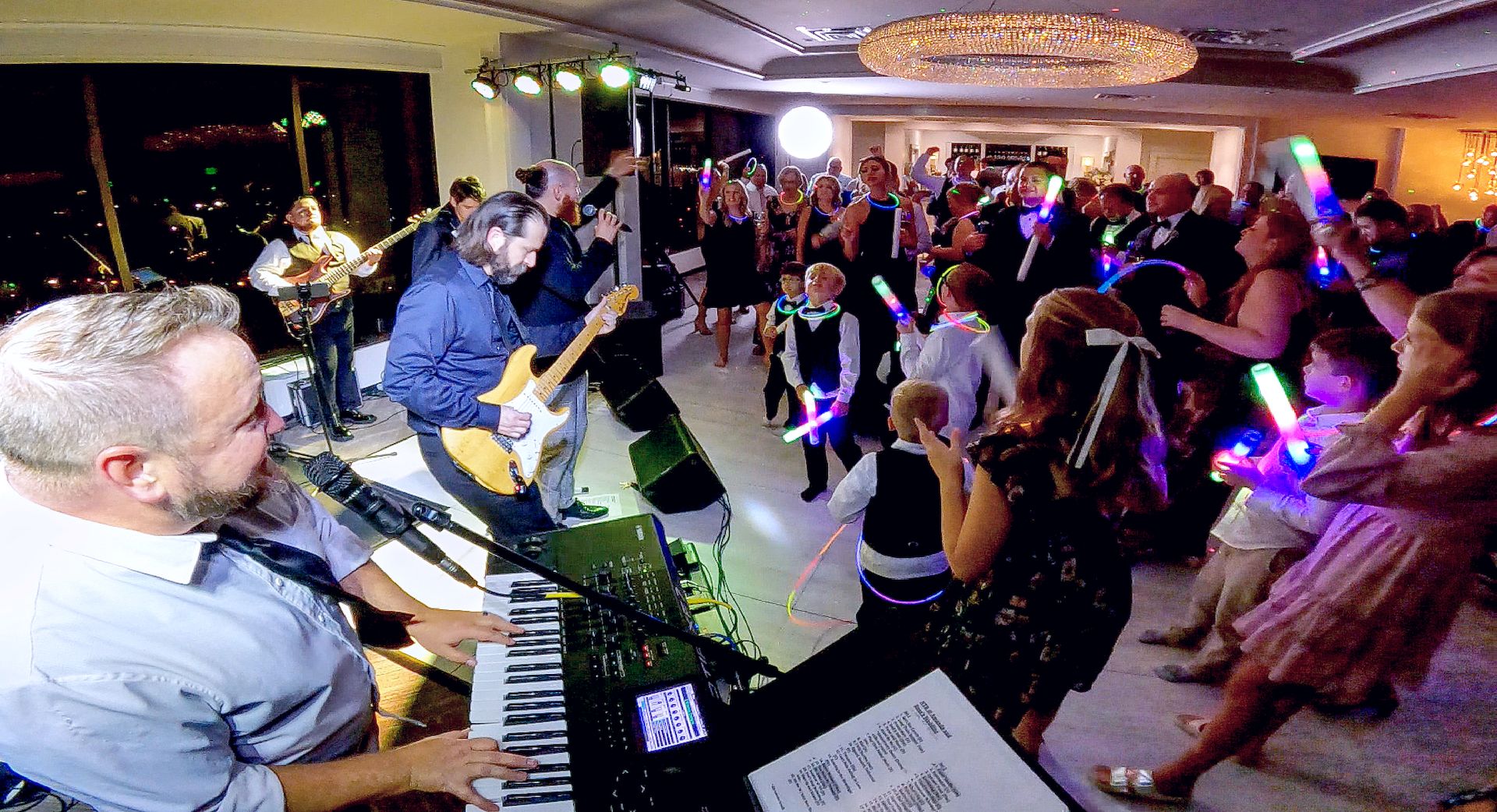
The Boring Stuff That Gets You Hired For Bigger Gigs 😐
Flashy Gets Attention. Boring Gets You Hired.
We musicians tend to think that getting better gigs means getting better at just the performance.
- Better songs.
- Better gear.
- Better vocals.
- Better playing.
- Better stage presence.
And yes, all of those things matter.
But there's another side of being a professional performer that isn't nearly as exciting.
In fact, it's downright boring.
And believe it or not, mastering the boring stuff may be what gets you hired for your next gig.
A Conversation That Had Almost Nothing to Do With Music
After a recent wedding I played, the mother of the bride reached out through our band leader to get my contact information.
She had seen that I had been recording some video with the GoPro camera I often bring to my shows and wanted to see if she could get copies of the footage.
We ended up talking for about an hour and a half.
But here's what was interesting.
We barely talked about the videos.
We talked about the experience.
We talked about the band.
We talked about the work we had done that day and how everything came together to create a great experience for her family.
She liked the band.
She liked me.
And apparently, she liked us enough that she invited my wife and kids to a Christmas event she was having.
That's a pretty cool feeling.
And it made me think about something that is easy for musicians to overlook:
The thing that makes a client remember you may have very little to do with the music you played.
It's the little things.
The boring things.
The things that make you look like a professional.
Great Musicians Aren't Automatically Great Professionals
As musicians, we love the flashy stuff.
We want to put on a great show.
We want to play great songs.
We want people dancing.
We want the big moments.
We want the crowd cheering.
That's the fun part.
But when someone hires you for a wedding, corporate event, private party, festival, or other important event, they're not just buying 90 minutes of music.
They're buying an experience.
And they're also buying peace of mind.
They want to know:
"Can I trust this person to handle this?"
That's where the boring stuff comes in.
1. Respond to People
This sounds ridiculously simple.
And that's exactly why it's so easy to overlook.
Answer your emails.
Return messages.
Respond to inquiries.
If someone reaches out through social media, don't make them chase you down.
And when you respond, actually answer the questions they're asking.
If someone is asking about pricing, don't just send them a generic response that could have gone to anybody.
Pay attention to the person you're talking to.
Make communication easy.
Because if you're difficult to reach before someone hires you, they're already wondering what you'll be like after they give you their money.
2. Show Up and Be Prepared
Again...
Boring.
But incredibly important.
Know the schedule.
Know where you're supposed to be.
Know when you're supposed to be there.
Arrive prepared.
Do what you said you were going to do.
It sounds like common sense, but reliability is a major part of being a professional.
If a show is supposed to start at 7:00 and your band is still setting up at 6:55, you've already communicated something to the client.
And it's not a very good message.
Being a musician doesn't mean professional expectations disappear.
If you're being paid as a professional, act like one.
3. Look Like You Belong There
Here's one I've been thinking about personally.
The band I play with does a lot of weddings and corporate events where guests are dressed pretty nicely.
Suits.
Ties.
Dresses.
Evening wear.
And we're often front and center for a large portion of the event.
So we need to look like we belong there.
Recently, I had a pair of black jeans that I liked wearing to gigs.
They were comfortable.
They looked pretty good.
But they had started fading.
Our band leader noticed it and pointed it out.
And he was right.
They were starting to look less like a professional pair of black pants and more like... well, a pair of faded black jeans.
So I bought a new pair.
The lesson isn't that every musician needs to wear a suit.
It's this:
Do you look like you belong at the event you're trying to play?
If you're playing a casual bar, jeans and a nice shirt might be exactly right.
If you're playing a tropical-themed event, maybe a Hawaiian shirt makes sense.
Maybe you even go completely off the rails with a suit jacket and shorts.
The point isn't the specific outfit.
The point is whether your appearance communicates that you understand the assignment.
4. Have Your Business Stuff Together
This is where a lot of musicians lose credibility without even realizing it.
Do you have a contract?
Is your pricing organized?
Can you easily create a quote?
Can you send an invoice?
Can you collect a deposit?
Do you have a system for keeping track of dates and event details?
Do you know your technical requirements?
Does the client know what you need from them?
Do you have appropriate insurance?
What happens if something goes wrong?
These aren't exciting questions.
But they're professional questions.
And when you're dealing with a client who is spending thousands of dollars on entertainment for an important event, they matter.
You don't want your client thinking:
"I hope these people know what they're doing."
You want them thinking:
"They've got this."
5. Make the Client's Life Easier
This might be one of the biggest differences between simply playing a gig and being a professional performer.
At weddings, I often end up doing some emceeing and coordinating with the wedding coordinator, venue, photographer, videographer, and other vendors.
And I've learned to really enjoy that part of the job.
Why?
Because I'm not just thinking about what the band needs.
I'm thinking about what the entire event needs.
Maybe the photographer needs everyone in a certain position.
Maybe the videographer needs to be ready for an entrance.
Maybe the coordinator needs the band to adjust the timeline.
Maybe the bride and groom want to change something.
Your job isn't necessarily to say:
"That's not what the original schedule says."
Your job is to figure out what needs to happen next.
Make life easier for your client.
That's what professionals do.
6. Have a Plan B
Here's something every experienced performer eventually learns:
- Things go wrong.
- The schedule changes.
- Weather happens.
- Equipment fails.
- Musicians get sick.
- Venues change.
- Clients change their minds.
The plan you carefully created weeks ago may not survive the first hour of the event.
And that's okay.
Professionals don't expect everything to go perfectly.
They are prepared for what happens when it doesn't.
At a recent wedding, our original plan was to perform inside.
Instead, we ended up playing outside because it made more sense for the event.
Fortunately, we had already thought about weather and had some backup plans in place.
That's the difference.
The goal isn't to prevent every problem.
The goal is to be prepared enough that the problem doesn't become the client's problem.
7. Take Care of What Happens After the Gig
A professional relationship doesn't necessarily end when the last song finishes.
What happens afterward matters too.
Did something go wrong?
Address it.
Did the client have a concern?
Listen.
Can something be fixed?
Fix it.
And perhaps most importantly, ask for feedback.
The band I work with does this particularly well.
Our band leader makes sure clients have an opportunity to share their experience through reviews and direct feedback.
And those reviews become incredibly valuable.
Of course, people talk about things like keeping the dance floor full and having a great time.
But some of the most valuable comments are about the individual people they interacted with.
They remember how they were treated.
They remember who made their lives easier.
They remember who they could trust.
And those experiences become part of the reason someone else decides to hire the band.
Your Client Isn't Asking the Same Question You Are
Here's the biggest takeaway.
As musicians, we tend to ask ourselves:
Am I good enough?
- Do I sound good?
- Do I know enough songs?
- Is my band good enough?
- Am I technically good enough to play this event?
But your client may be asking a completely different question.
They're asking:
"Can I trust you?"
How much am I going to have to worry about this?
- Will you show up?
- Will you be prepared?
- Will you communicate?
- Will you look professional?
- Will you handle problems?
- Will you make my event easier?
- Will you take care of things without me having to babysit you?
That's what being a professional performer is really about.
The Flashy Stuff Gets Attention. The Boring Stuff Gets You Hired.
The exciting parts of performing are still important.
You need to be good.
You need to entertain people.
You need to create a great show.
But don't overlook everything that happens before the first note and after the last one.
Because those boring little details communicate something incredibly powerful:
"You can trust me."
And when a client trusts you, you're no longer just another musician who can play songs.
You're a professional performer who can be counted on to deliver an experience.
That's the kind of performer people remember.
That's the kind of performer people refer.
And that's the kind of performer people hire again.
And again.
If you want to become a better live performer, not just a better musician, that's exactly what I'm here to help you do.
Be The Performer You're Meant To Be.
Be the Performer You Are Meant to Be!
Join us to start performing with confidence, purpose, and fun... one email at a time.
When you signup, you will get regular email updates with free content and product offers.