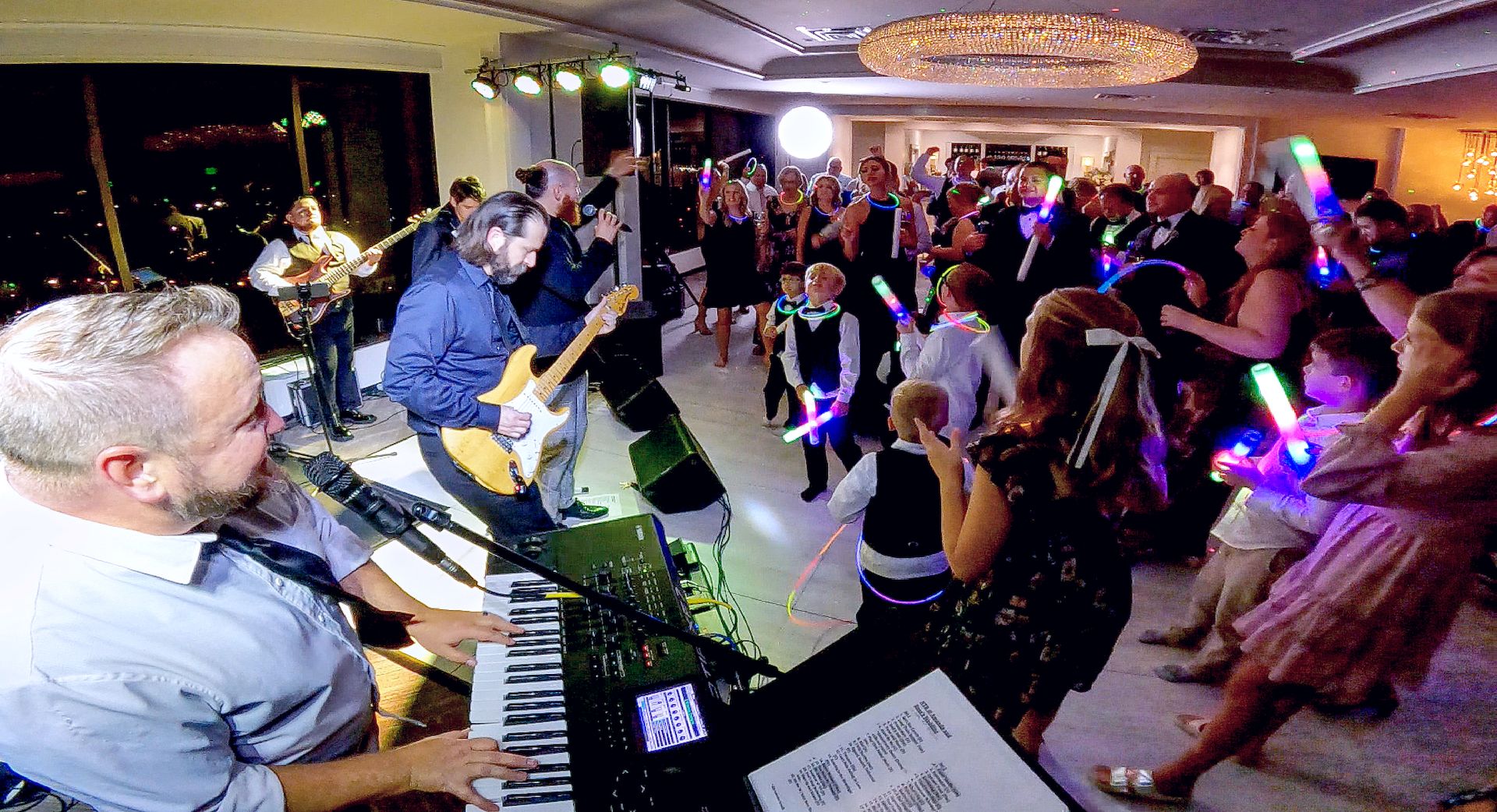
How Big Is Your Show? The 7 Levels of Live Performance
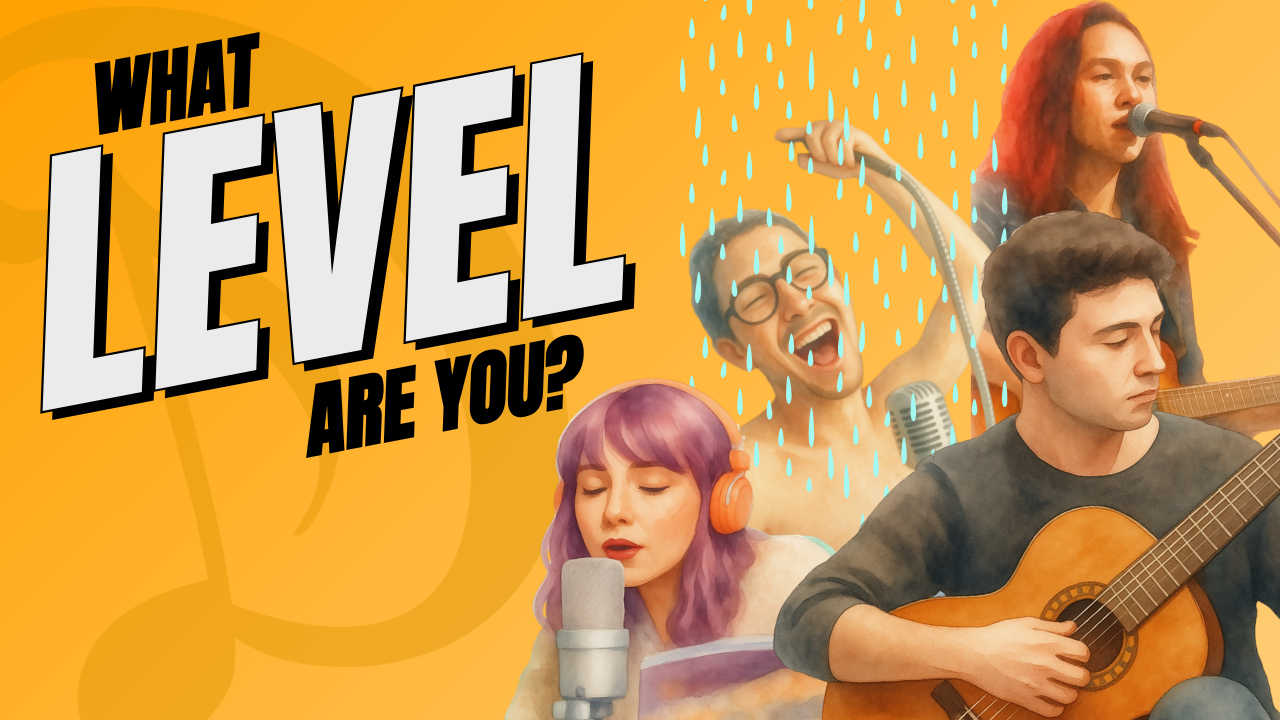
This is a question I think every performing musician should ask themselves:
What level of performer am I?
- And I'm not talking about how good you are at your instrument.
- I'm not asking how good your vocals are.
- I'm not asking how many songs you know, how many gigs you've played, or how many years you've been performing.
I'm asking something different:
What kind of experience are you creating for your audience?
Because there's a huge difference between someone who simply performs music and someone who intentionally creates an unforgettable live experience.
And that's what helped me discover the 7 Levels of Live Performance.
These aren't just levels that rank of your musical talent. In fact, it has nothing to do with that.
You can be an incredible musician and be a Level 0 performer.
You can also be a relatively inexperienced musician who creates a surprisingly powerful live experience.
The difference is the scale, complexity, and audience experience of the performance you're creating.
Level 0 - The Shower Singer
Let's start with the performer who isn't really performing for an audience yet.
The Shower Singer.
This is the person who loves music.
- Maybe you're an incredible singer.
- Maybe you're a phenomenal guitar player.
- Maybe you play drums on your steering wheel every time your favorite song comes on.
- Maybe you sing in the shower, play piano in your basement, or jam along with records in your living room.
There's nothing wrong with this.
In fact, this is where almost every performer starts.
The important distinction is that the performance is primarily for yourself.
You're enjoying the music.
You're expressing yourself.
You're having fun.
But you're not intentionally creating an experience for an audience.
And that's perfectly okay.
Level 1 - The Solo Performer
Now we're adding the audience into the equation.
This could be a solo musician playing an acoustic guitar at a coffee shop.
It could be someone singing with a backing track.
It could be karaoke.
It could be an open mic performance.
The audience is primarily there to hear someone perform music.
The visual element may not be particularly important.
Interaction might be limited.
The performance might even function primarily as background entertainment.
And again…
There's nothing wrong with this.
Solo performers can have a great careers in music.
This is simply a simpler type of audience experience.
Level 2 - The Act
Now things start getting more interesting.
At this level, the performer becomes more than a delivery mechanism for songs.
You're starting to add:
- Personality
- Stage presence
- Banter
- Movement
- Audience interaction
- Visual presentation
The audience isn't simply listening anymore.
They're watching.
This could still be a solo performer.
It could also be a duo.
The important difference is that you're beginning to give your audience a reason to pay attention to YOU, not just the music.
They're starting to think:
"I like watching this person."
This is a significant shift for both you, the performer, and your audience.
Level 3 - The Ensemble
This is the point where we start adding more people.
Maybe it's a duo, trio, or quartet.
It could look like:
- A guitarist and vocalist
- A pianist and vocalist
- An acoustic duo
- A jazz trio
- A small cover group
Adding additional performers fundamentally changes the audience experience.
Yes, there are now more things to hear.
But there's also something else:
There are more things to see.
You can have musical interplay.
Harmonies.
Different soloists.
Multiple personalities interacting with the audience.
Suddenly, the audience's attention can move around the stage.
And that creates a much richer experience.
Level 4 - The Band
This is probably where most people picture a traditional "live performance."
- Drums
- Bass
- Guitar
- Keys
- Multiple vocalists
A full band.
And there's a reason a band feels bigger.
The sound naturally is bigger.
The visual picture is bigger.
There's more movement.
There's more energy.
There's more happening on stage.
And when you add a drummer and bassist to a smaller ensemble, something about the performance starts to feel fundamentally different.
It feels like a full live show.
But here's the catch:
Being a band doesn't automatically mean you're putting on a show.
A band can simply be a group of musicians standing on stage playing songs.
And that's where we get to the next level ...
Level 5 - The Show
This is where things really start to really change.
A show is more than a group of musicians performing songs.
The performance becomes intentional.
You're designing the audience experience.
Maybe you have:
- Planned entrances and exits
- Transitions
- Medleys
- Choreography
- Stage movement
- Audience interaction
- Energy changes
- Planned moments
- Emotional peaks
- A big finale
Instead of simply asking:
"What song are we playing next?"
You're asking:
"What do we want the audience to experience next?"
That's a completely different way of thinking about live performance.
You're creating a sequence.
You might start with a strong opening.
Build energy.
Create a surprising moment.
Bring the audience into an emotional experience.
Then finish with a huge payoff.
Now you're not simply performing music.
You're designing a show.
And honestly, I think this is where many performers struggle.
Not because it's necessarily difficult.
But because they've never been taught to think about performance this way.
Level 6 - The Production
Once you've designed the show, you can start designing the environment around the show.
That's Production.
Now the stage itself becomes part of the performance.
You're thinking about things like:
- Professional lighting
- LED screens
- Video
- Stage design
- Costumes or coordinated performance attire
- Special effects
- Visual transitions
- The physical environment
The audience isn't just watching musicians anymore.
They're experiencing an environment.
And this is where one of my favorite concepts comes into play:
Sounds. Sights. Feelings.
What does your audience hear?
What do they see?
And most importantly…
How does it make them feel?
That's the difference between simply putting on a performance and intentionally designing an experience.
You don't necessarily need a million-dollar production to do this.
You can start with whatever is possible within your own world.
Maybe it's better lighting.
Maybe it's a more intentional stage setup.
Maybe it's coordinated clothing.
Maybe it's a video screen.
Maybe it's simply thinking differently about what your audience sees when they look at your stage.
The goal isn't necessarily to spend more money.
The goal is to make the environment part of the experience.
Level 7 - The Spectacle
And then there's Level 7.
The Spectacle.
This is where the performance becomes something much bigger than the music.
Think about the biggest concert productions in the world.
Arena tours.
Major theatrical productions.
Las Vegas shows.
Immersive experiences.
The performance isn't simply something you watch.
It's an EVENT.
The audience might experience:
- Massive visual environments
- Video
- Lighting
- Choreography
- Multiple performers
- Special effects
- Audience participation
- Dramatic transitions
- Immersive elements
- Unexpected surprises
At this level, something is always happening.
The audience might not even know where to look.
And that's part of the experience.
The performance becomes larger than any individual performer.
It's not simply:
"That singer was amazing."
It's:
"I can't believe what I just experienced."
That's the goal of a spectacle.
Not simply to be bigger.
Not simply to be more expensive.
But to create something memorable.
Something your audience talks about tomorrow.
Next month.
Maybe even years from now.
So… What Level Are You?
Here's the important part.
There is no wrong answer.
We don't all have to be a Level 7 performer.
Maybe you love being a solo musician who plays small clubs, wineries, restaurants, and coffee shops.
Maybe you love playing in a small acoustic duo. (Honestly, I'd love to do more of this myself.)
Maybe you want to build a full band.
Maybe you want to create an incredible show without adding massive production.
Maybe you're already building something much bigger.
The question isn't:
"What level SHOULD I be?"
The better question is:
"What level do I WANT to be?"
Because your answer determines what you need to do next.
And that's really the point of these seven levels.
They give you a way to look at your performance and identify your next steps.
Don't Confuse Talent With Performance
This may be the most important takeaway.
These levels aren't a measurement of your musical talent.
They're a measurement of the scale and intentionality of the experience you're creating.
A Level 1 performer can be a phenomenal musician.
A Level 7 performer might not be the world's greatest vocalist or instrumentalist.
But Level 7 is intentionally creating an enormous audience experience.
It's a different skill set.
And that's good news.
Because it means that you can learn this stuff.
You can learn how to interact with an audience.
You can learn stage presence.
You can learn how to design transitions.
You can learn how to structure a show.
You can learn how to use visuals.
You can learn how to think about your audience's experience.
You can learn how to become the performer you're meant to be.
So Where Do You Want To Go Next?
Take a look at where you are right now.
Are you a:
- Level 0 - Shower Singer
- Level 1 - Solo Performer
- Level 2 - Act
- Level 3 - Ensemble
- Level 4 - Band
- Level 5 - Show
- Level 6 - Production
- Level 7 - Spectacle
Now ask yourself:
"What's my next level?"
You don't have to jump from Level 2 to Level 7.
You might simply need to learn how to become more engaging.
Or add some movement.
Or create better transitions.
Or develop a stronger opening.
Or design a better finale.
Or improve your stage setup.
Or start thinking about the entire audience experience instead of simply thinking about the songs.
Small improvements can create a dramatically better performance.
And that's exactly what I want to help musicians, singers, bands, and entertainers do.
Don't just play the music.
Be the Performer You're Meant to Be.
If you're ready to take your performance to the next level, check out our courses, coaching, tools, and resources designed specifically to help live performers create better experiences for their audiences.
Be the Performer You Are Meant to Be!
Join us to start performing with confidence, purpose, and fun... one email at a time.
When you signup, you will get regular email updates with free content and product offers.